From Spandex to Digital Sculpting: How I Experiment with AI to Augment My Superhero with Soul
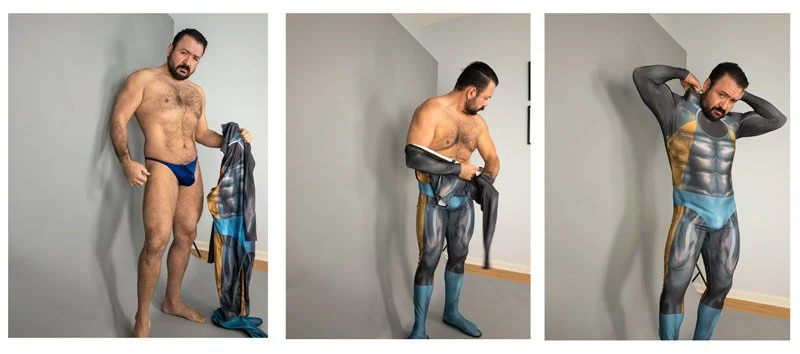
Behind the scenes photos from the 2019 Photo Shoot. Copyright Cesar Torres
I’ve been the one at the Photoshop desk since 2013. It’s always been me.
When I launched my indie inprint Solar Six and began building my Aztecverse—from The Coil dark fantasy series to How to Kill a Superhero to Our Lord of the Flowers—I didn't have a massive studio budget or a team of assistants. But I had ambition, grit, and tons of creativity. I used my background in product design, digital photography, and my willingness to spend late nights reworking every layout and retouching every image. As the founder of the queer sportswear brand LED Queens, I have never outsourced my creative director duties. To this day I still work on all the visuals for LED. And over time, my skillset as a creative director and product designer has grown. I have a vision for every book and product I launch.
I’m not a "prompt engineer" playing with new toys. I am an author and publisher who has consistently applied my own skillset in product design, graphic design, and photography. While I’ve hired human illustrators for covers when I needed skills beyond my own, the layouts, photos, and retouching that you see in my books and web sites have always been my hand.
For the record, you should also know that although I am open to exploring machine learning and AI tools for the visuals of my book universe, the actual prose and writing of my novels will always remain human centered. In other words, I write all my books completely on my own, but the book covers, marketing images and photo art will remain open to new technological advancements and approaches. Nothing can substitute my own writing when it comes to my work as a novelist.
Recently, I put out a "Call for Artists" to help create new art (book illustrations, plates, web comics) for the upcoming second edition of How to Kill a Superhero. The response? No one has reached out to me yet. To be transparent about my meager resources is not shameful; it shows I have ingenuity. Even if I believe AI products are inherently colonizer tools, I’ve written about how brands can pivot or leave them behind. But right now, I refuse to let Roland’s story stagnate.
High and Tight: Evolution
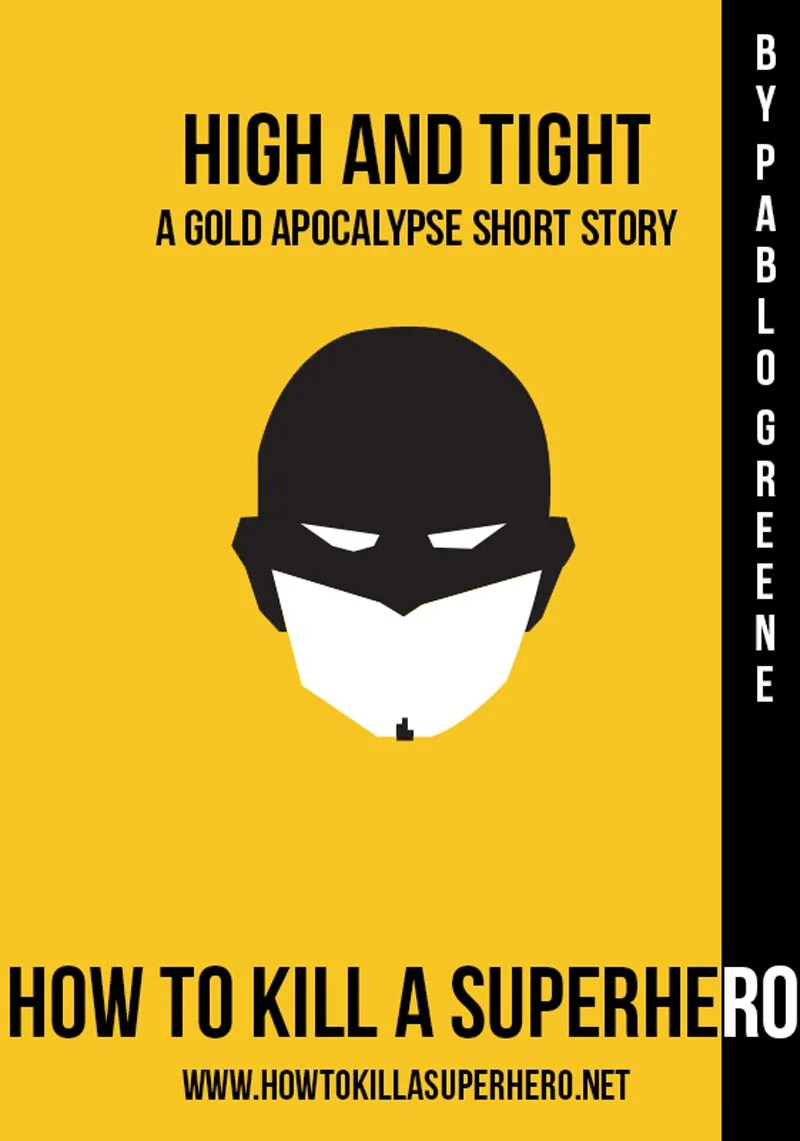
High and Tight is a free short story that I launched on Kindle several years ago as a way to give readers a freebie that pulls them into the book series. But it’s also an essential story about Roland that takes place between books 1 and 2 in Berlin, Germany. Above you can see the original cover that I launched. In 2026, I am preparing to re-design the cover and elevate it to a whole new level. In this new cover I plan to show Roland as a human figure instead of an emoji-like icon. So let me walk you through a major creative (and technological) evolution, and the part you have to play in this story.
The Model and the Canvas: The Alex Ross Precedent
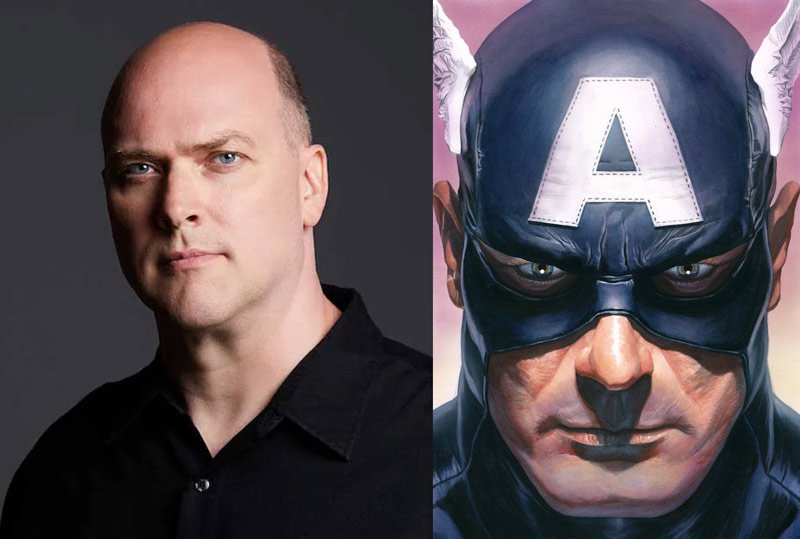
Images via https://www.alexrossart.com/
I am proud to use my own body as the model and the canvas of my own books. I did this for almost a decade as Pablo Greene, and I am doing it even today as myself in my adjacent project Our Lord of the Flowers. Using myself as a model is born of the same necessity that fueled legends like Alex Ross. But it’s also something deeper for me, closer to the work of Cindy Sherman and Frida Kahlo, as a way to explore interiority and reality. I don’t know exactly why Alex Ross uses himself as a model for some of his paintings, but I can assure you there’s creativity at the heart of his impulse, too.
Alex Ross has gone on record to say he had many superhero suits sewn in spandex, using a self-timer and a camera to create models of himself that he could paint later. He claims he has burned those photos since, but he’s on record discussing this: Alex Ross on using himself as a model. I am following that same lineage—using my own body to ground the character in reality.
The Evolution: A Technical Walkthrough of the Four Stages
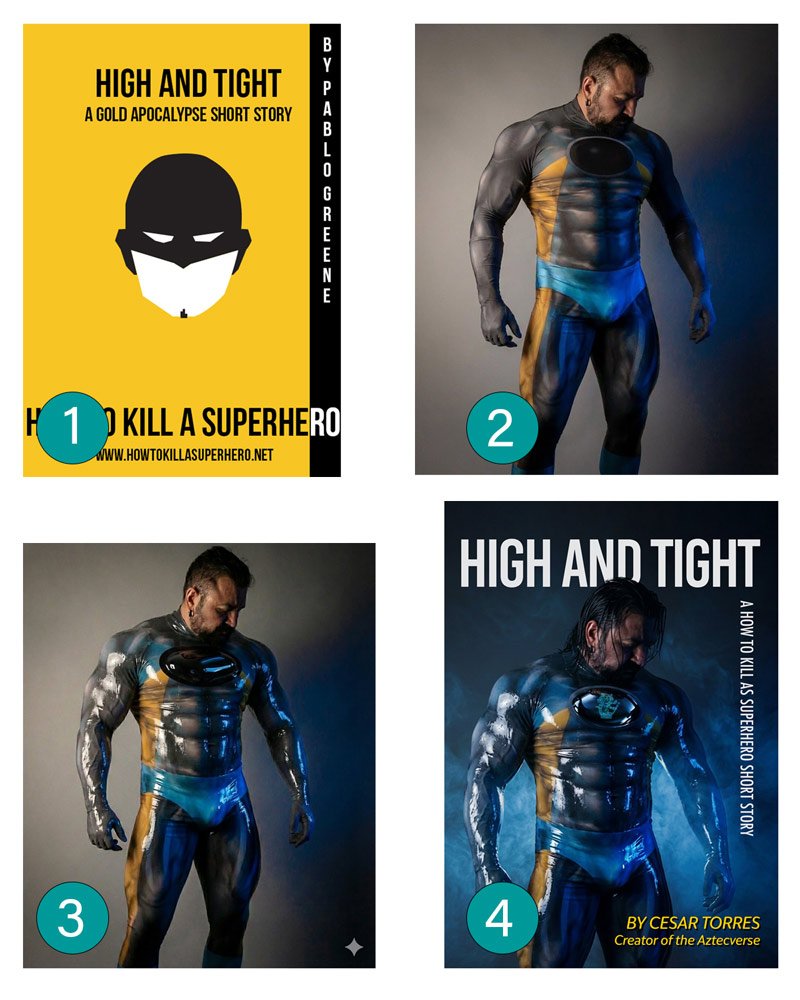
This design refresh is part of my process as an artist and designer. It’s a way to open up creative opportunities for the upcoming second edition of the series. Here is exactly how I navigated the four stages of this project:
Stage 1: The Original Yellow Cover This was the starting point, designed by me. It utilized the center icon designed by illustrator Nick Agin. It was a clean, graphic approach, but as the HTKS universe has evolved, the cover needed to move toward something more visceral and cinematic.
Stage 2: The 2019 Studio Shot The foundation of this new direction is a photo studio shot I took in Chicago in 2019. I am wearing the real Roland cosplay spandex bodysuit I had custom-made. Mark Dupuis (4neodesigns) created the dye-sub pattern, I had the suit manufactured in China, and I shot the photography myself in my Chicago photo studio, using my Sony A6400 camera. This suit was a staple for my YouTube channel, marketing materials, and socials. This is the human "soul" of the image, and an extension of the book cover for Gold, the fourth book in the series
Stage 3: The Digital Sculpting (Nano Banana) To move from spandex to a "superhero" texture, I applied "wet look" and mirror effects to the chest of the figure. I used Nano Banana (by Google) to achieve this. Using AI here saved me the immense effort of doing this manually in Photoshop with complex filters and brushes—a task that would have taken me hours of meticulous retouching.
Stage 4: The Final Composite and Narrative Detail The final image includes long, wet hair—a defining trait for Roland. Generating wet hair digitally is an extremely difficult and expensive task in editorial photography. Nano Banana helped generate the hair, but the final image is a result of my professional skill set. I manually masked out the figure, swapped the background, included fog and smoke, and handled the typographical design.
This is a reflection of my skills in product design and decades of photography experience. I have the chops for this, and I’m using these tools to bridge the gap between a $0 budget and the cinematic quality my readers deserve. Keep in mind that this work in progress has not yet been launched as a new cover for the short story. It’s still in development, which is why I am writing this post.
The Challenge: I Want Your Feedback
So now that you can see how I work, it’s important for me to listen to your feedback about these approaches. In indie publishing spaces, the use of AI remains controversial, but pivotal. For some book authors and their indie imprints, tools like Nano Banana may allow them to scale better. For some, it won’t. But I feel that it’s important for me to communicate to you that since the very first book I ever launched as an indie author back in 2013, I have been the visionary that has driven the covers and branding forward, choosing fonts, making photo shoots happen, selecting palettes and visual languages, tackling UX. And as I look ahead at the rest of 2026, I want to continue to experiment with new tools, but I will do so with my own ethical and creative frameworks in mind. You may challenge me and demand that I go hire a full team, but keep in mind that for indie authors like me, the resources to do so are meager. And that leaves me with my most powerful tool: my imagination. My imagination is big, and it creates full worlds. I hope that this narrative can help you understand where I am coming from, and where I plan to go, together with you, reader.
I think of AI tools as helpful, and I believe they should be used lightly. I am moving toward a hybrid approach to make sure my work evolves, but I won’t do it in a vacuum. I want to provoke a conversation:
Do you think the way I used AI in this potential new cover is ethical? Or is the use of these tools such a turn-off that you would never download the product, even if the "bones" of the image are 100% my own body and photography?
The Human Gap: If you are completely against AI, why isn't anyone writing me back for the call for human artists? I cannot afford a $5,000 physical photo shoot to reproduce this revision. How do we keep indie publishing alive if we don't use the tools at our disposal?
I love Roland and the HTKS books with a passion. I want these tools to help me tell the story properly—with scale, but with soul.
What is your actual point of view on this? I’m listening. Send me your feedback.