Beyond the Hero: Why Author Cesar Torres Is Returning to HTKS for "Roland’s Death"
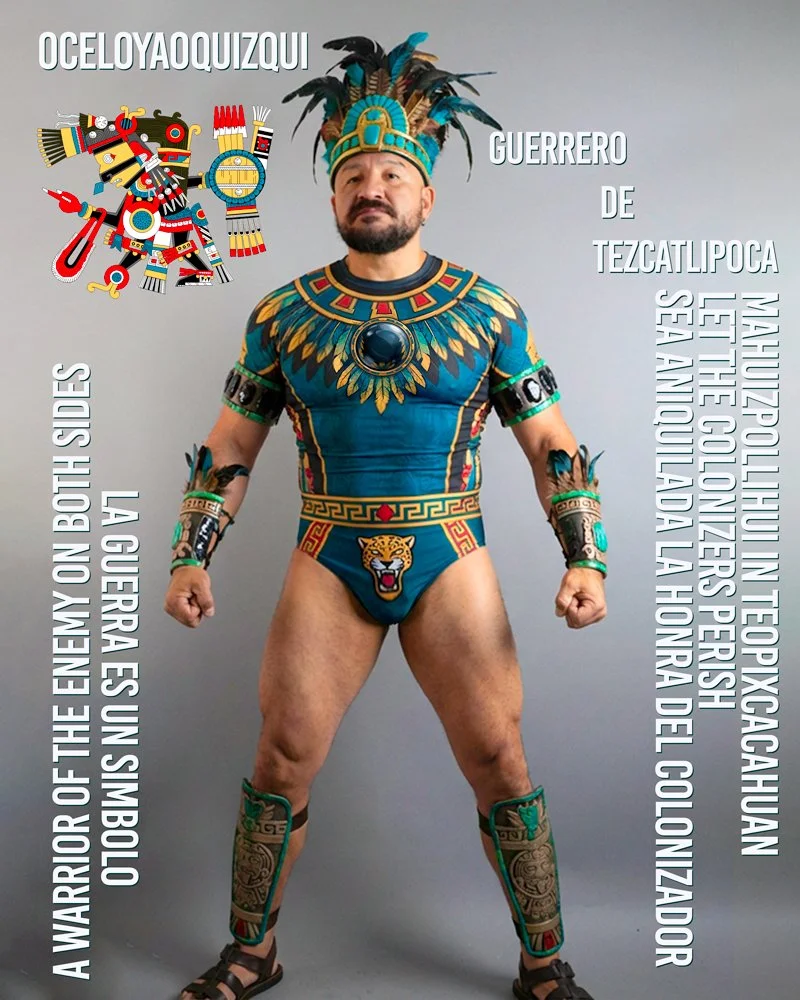
Photo Copyright Cesar Torres, 2026
For a long time, I wasn't sure if I was ready to step back into Roland’s world. In fact, for several years, I considered quitting being a novelist altogether. The journey through the first four books of How to Kill a Superhero (HTKS) was a visceral and painful experience for me as a writer. This set of four books was set to close out my lifelong obsessions with superheroes, comics and spandex obsessions. But as a Mexican artist, I’ve realized that the stories of our ancestors—specifically the complex, dark, and beautiful mythology of the Aztecs—are far from finished. Sometimes, our ancestors call us back to the place we just came from.
I am thrilled to announce a new book project, currently code-named "Roland's Death". While it isn’t a traditional direct sequel, it is a major return to the series that will finally reveal what happened to Roland after the traumatic conclusion of Book 4.
Beyond the "Infantile" Superhero: The Power of Toxcatl
In the modern landscape, superhero stories often feel trapped in a cycle of "infantile" stakes. I have been very clear about my point of view in the past 15 years: I think that superhero stories really help support the coming out process of queer folks, and they also help young people of all genders and sexual identities find their way in the world through art. But the sad truth is that almost all superhero comics infantilize the reader, simplifying stories that are far too complex to leave unattended. We can blame Marvel’s MCU to some extent, but this trend has been in place for a very long time, since the inception of comics. I am not alone in feeling this. Alan Moore wrote Watchmen for a reason, and it’s no secret that my four books of How to Kill a Superhero offered a similar point of view about superheroes and the stories we build around them. Superheroes have a limit in terms of being useful to the psyche of adults. We need deeper stories, more complex stories. Stories that don’t just entertain but that also force the reader to think critically for themselves.
To move beyond the limitations of traditional superhero stories, I leveraged the ancient Aztec Festival of Toxcatl, and I did so by a re-telling that ancient, historical ritual through the story of Roland and HTKS.
In Aztec tradition, Toxcatl was the month dedicated to Tezcatlipoca, the "Smoking Mirror"—a deity who governs duality, fate, and transformation. SPOILER: And as you know, Roland slowly begins to understand that his powers come from a powerful Aztec god. By the time we arrived at Gold, the fourth book, it’s evident that Roland has been chosen by this god. In real life, the ritual that the Mexicas practiced in the era before the invasion by the Spaniards, involved choosing a young man to live for one year as the living embodiment of the god Tezcatlipoca. He was dressed in the garb of the God, treated with the highest honor, only to eventually meet a calculated, ritualistic end. Yes, at the end of his tenure, he was sacrificed back up to the god.
When I wrote the four HTKS books, this re-telling allowed me to explore key ideas:
The Weight of Fate: Understanding that power comes with a predetermined cost. Roland has agency to some extent, but there are bigger forces moving the event of his world, and his destiny.
True Duality: Moving away from simple "good vs. evil" to the complex nature of a god who plays with the very fabric of reality. This is how I move away from the oversimplification of comics, TV and films. Most importantly, I am able to explore Roland’s sexuality through this lens too, offering up unapologetically gay and queer desire to Roland’s choices. Most mainstream franchises of heroes only offer up superheroes and villains without real sexual desires and obsessions. I wanted to give something to my readers that was honest and true to the lives of gay and queer people in leather and kink communities.
Cultural Reclamation: Using dark fantasy and sci-fi to tell authentic Mexican stories that demand to be seen and heard. I refuse to accept the meager crumbs of the colonizers in publishing circles or to compromise the Mexican aspects of my stories. It’s why I operate as an indie author and connect directly through my readers.
A New Vision: The "Warrior of Tezcatlipoca"
The new photo art piece I’m sharing today (seen above) represents a "Ocelayaoquizqui" the nahuatl term for Aztec warriors of Tezcatlipoca. In it, I use the canvas I love working with the most, spandex, and constellate it into a vision of text and image that expresses the way that this vision for the new book came to me. Yes, it’s a vision that I must fulfill. It captures the moment of transformation—where the ancient deity manifests through a modern vessel.
This image serves as my own call to action. It is a reminder that "War is a Symbol" (La Guerra es un Símbolo) and that the honor of the colonizer is meant to perish in the face of indigenous truth. Remember, there are wars that happen inside the psyche of every individual, and we must rise to that challenge to battle the darkest and unhealthiest parts of ourselves. And I fight this battle with my fiction and my photo and spandex art.
What’s Next for the Aztecverse?
While I work on "Roland's Death," keep an eye out for my latest book, Our Lord of the Flowers, which begins its rollout this Spring. This novel is a different beast entirely, but it is a core part of the Aztecverse.
For the eagle-eyed fans, there is a major Easter Egg and intersection between Our Lord of the Flowers and the HTKS world. Characters and threads from Roland’s journey are woven into the very heart of this new story.
If you would like to get updates on the new project “Roland’s Death” as I begin my writing process, be sure to sign up for updates in my free newsletter Muscle and Spandex.