
Call for Queer Artists: Rev-Share Opportunities and AI-Free Fan Art Features for How to Kill a Superhero
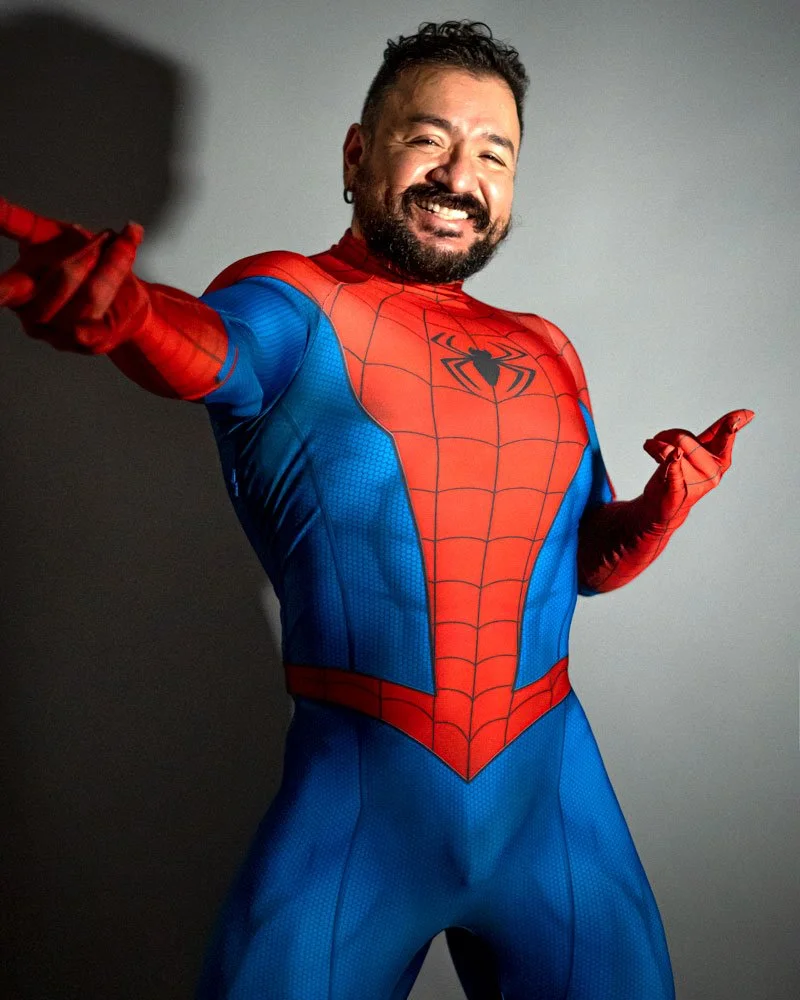
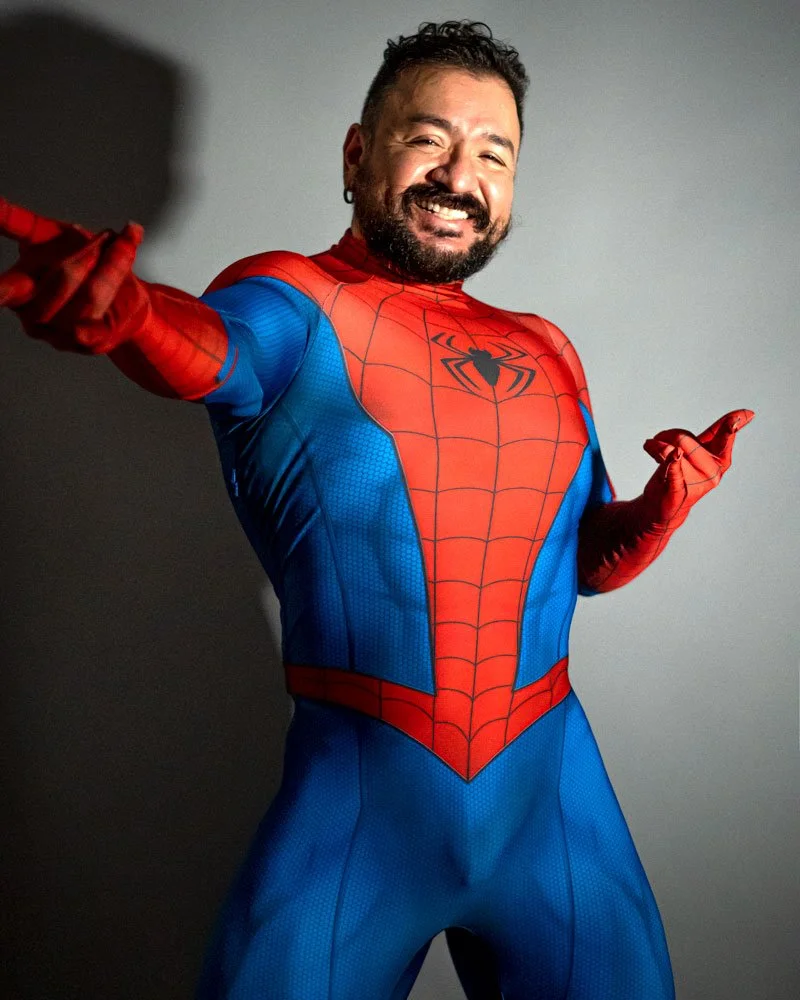
Photo by Cesar Torres. Copyright 2018. And since we are on the subject, this image was made without any generative AI. For more, visit the Cosplay Archives.
A Message from HTKS: Reclaiming Our Space
Let’s be honest: the digital landscape for queer artists is becoming a desert. Platforms like Instagram, X, and TikTok that once promised a community now bury our work under algorithms, shadow-ban "spicy" content, and exploit our creativity.
At How to Kill a Superhero (HTKS), we believe human lived experience is the soul of art. While we explore the edges of new creative tools, we are officially centering human artists. We want to turn this blog into a safe harbor—a curated home where queer talent is celebrated, not just used as "content."
We are looking for creators to join our legacy alongside incredible artists like Nick Agin, Adam Graphite, and Kappiny Art. ---
Two Ways to Collaborate
We are opening two distinct tracks for artists to work with the HTKS brand.
Track 1: The Fan Art Feature (Community & Traffic)
Who it’s for: Illustrators who love the How to Kill a Superhero books and its universe, and want to share their vision.
The Exchange: This is an unpaid track, but it is not a "shoutout" into the void. We will create a dedicated, high-traffic blog post featuring your work, your process, and direct links to your portfolio and commission pages.
The Goal: To send our loyal, niche fanbase directly to you, bypassing the social media algorithms that hide your work. And most importantly, to create opportunities inside our LGBTQ community that is decolonized from tech bro culture, big tech and platform monopolies.
Track 2: Visionary Collaborators (Paid Rev-Share + Secret Zine)
Who it’s for: Professional illustrators and designers interested in book covers and merchandise.
The Partnership: You will design official covers or merchandise (T-shirts, prints, etc.).
The Compensation (The "Protective" Clause): We offer a 20% Revenue Share of Net Profit for every item sold featuring your design.
Note: "Net Profit" is defined as the sale price minus the actual cost of goods, third-party platform fees (e.g., Printful/Shopify), and shipping/taxes. This ensures a sustainable partnership where the artist is paid fairly for every successful sale.
The Contract: All collaborators will sign a clearly written, "plain-English" legal contract that guarantees your 20% share and outlines the ownership of the artwork.
The Inner Circle: All paid collaborators get an automatic invitation to our Secret Zine Project—a curated physical anthology of queer superhero art.
Our Commitment: 100% Human-Centered
We acknowledge the controversy surrounding AI in the fetish and superhero space. Our policy is simple: We want the human touch. We are looking for the "heat" and the heart that only a queer creator can bring to a canvas. No AI-generated submissions will be accepted for these opportunities. We want the HTKS web site to be a home where people can discover new queer visual artists and fresh talent.
How to Apply
Ready to join the HTKS Collective? Please follow the instructions below:
Option A: Fan Art Submissions
If you have HTKS fan art or want to pitch a feature, email us at our contact page. Please include a link to your portfolio and any specific HTKS characters you love drawing.
Option B: Rev-Share Application
To be considered for covers, merch, and the Secret Zine, email us at our contact page. Please include a link to your professional portfolio or shop. Let us know if you have experience with print-on-demand or book cover design.
A New Chapter of Our Community
The How to Kill a Superhero community is expanding again—with new essays, guest voices, and a renewed focus on advocacy. Expect posts that explore queer kink culture, literature, and the art of creating safe spaces. As the blog returns to life, it will amplify stories of personal transformation and resistance, preserving our shared history through writing, conversation, and creative expression.
It's been a long time since I posted meaningful updates to this portion of the web site. Starting today, I have renamed it to Community, as a way to foster growth for the communities of book readers, queer folks and kinky and leather communities that are part of How to Kill a Superhero.
The last four years have been quite complex for me, and that's why there is a big gap in updates. But as we head into 2026, I am happy to announce some big changes and expansions to this space.
I’m also re-igniting this blog. The last few years were… complicated. Platforms changed. I changed. And in that flux, this space got quiet.
Key Changes and Expansions
New blog posts on topics of community advocacy. My work with the How to Kill a Superhero book series as an artist and author also has an advocacy component, and I will be sharing new essays and news articles that help us build community, play safe, and enjoy literature of all kinds.\
A Community-Led Second Edition of How to Kill a Superhero. The How to Kill a Superhero saga is being reborn through a brand-new Second Edition featuring new covers, author introductions and more. I’ll be organizing a fundraising campaign to make it happen, with opportunities for supporters to help shape the release—think collector’s editions, signed copies, exclusive art, and behind-the-scenes insights into how these books came to life. Look for updates in this blog.
New posts by members of the community. You know that in the past I have hosted several podcasts about sex positivity, the literary arts and the intersection of cosplay and queer kink culture. I plan to bring new voices into the blog to tell their own coming out stories, the way they move through personal growth, and methods in which they build communities around the world.
New posts about safe spaces & advocacy: The way combat marginalization and erasure is through education and knowledge. I know that people nowadays don't want to read as much as they used to, but we will go against the grain so that we leave a written record of the work we are doing to build things out.
Your Call To Action Is Now
Here's where you come in. Using my contact page, please tell me how you want to play a part. Here's some questions to stimulate your mind:
What podcasts, books and Youtube channels do you recommend nowadays for other folks in the community
What are topics of safety that are currently being overlooked?
How do you interpret the way that new generations embrace sex positivity and kink?
What book authors would you like to see me invite to share space in this section of the web site?
What are your reactions to big events in our community like MIR, IML, Darklands?
What are the best parts of being a queer book reader? Does being a queer book reader come with any risk? Where do you find community with other book lovers?
These are just a few suggestions. If you have your own pitch for building community, send me a note.
The Problem with Patreon in 2021
Today I am writing to you to alert you to cumulative problems that have been developing on the platform Patreon over the past three years. I have been a client of the Patreon platform since 2017. Over the years, I tolerated many of those issues because I needed to make money as an artist to survive, and back then, the company seemed to have benign intentions. But the problems have become more frequent and chronic, just as the Patreon platform has also transformed into a corporate entity that is moving away from being a grass roots organization. Patreon has raised $90 million from investors, and it is valued at $1.2 billion. They have raised $255 million as of September 2020. Back in 2019, CEO Jack Conte told CNBC that the company’s business model would have difficulties maintaining a profitable business model unless it made changes. In 2019, Tech Crunch analyzed this challenge, and also forecast that an IPO could be part of Patreon’s future. Fast forward to 2021: the company is said to be planning to go public later this year, and the forecast of what will happen to independent artists and content creators like me is grim.
The future of the company promises to be very corporate. And historically, corporate greed and the arts have never mixed all that well, unless exploitation was factored into the relationship.
Here are a few of my personal issues with Patreon as it relates to my content and personal platform:
They claim to be a content-creation platform, but they are in a bit of an identity crisis. Sure, they provide tools for posting and sharing content, but what they are truly best at is being a payment processor. They are not very transparent about this.
When the COVID-19 pandemic arrived in 2020, Patreon gave content creators no significant resources to optimize their efforts to survive the crisis or the economic recession that has followed. I made my own decision to re-brand, optimize my offerings and pricing models, but I did it all by myself. Patreon gave us nothing that we could use as guidelines or even tutorials to survive.
Patreon has rolled out billing changes that affected my Patreon subscribers negatively. These changes include sudden new changes in fees and billing cycles. The burden was placed on us, the content creators, to relay that info to them, and thus Patreon absolved themselves of the responsibility for that change, even though they are the payment processor in these transactions. Sure, they gave creators templated content for us to distribute to Patrons, but I am appalled that they also wouldn’t message the subscribers directly to back up the messaging from individual content creators.
Patreon staff discriminated against me inside their Discord, marking my own show-and-tell content as NSFW, while describing straight creators’ show-and-tells of a similar visual style as absolutely appropriate for the corresponding channel. In other words, they told me to take my queer content to the back of the bus when it comes to peer-to-peer interactions on their Discord.
That brings us to changes that are happening today that I want to bring to your attention. This week, Patreon announced internally to creators a new billing cycle that will move away from billing you, my Patrons, on the first day of the month, and instead move to a new cadence where you are charged based on the day you join. You can read this Reddit AMA with Patreon CEO Jack Conte here, but please take a read through the comments from content creators. They show a palpable sense of concern that is only met with corporate platitudes from Conte as a result. Patreon has not confirmed if and when this change will roll out, but the community of Patreon content creators has spoken out about how this will negatively impact many creators, and more importantly, how this could also impact the most important folks in the equation: the Patreon subscribers.
Jack Conte will be hosting a town hall meeting tomorrow, February 4 to discuss these new changes, and I will attend. But at this point, I am only attending because I want to stay informed.
On my end, I am taking accountability for myself and my readers and fans, and making a big decision: I am leaving the Patreon platform this month.
My biggest concerns about Patreon are their lack of transparency, disingenuous messaging to their clients (us content creators), and the dark forecast of what will come when they align themselves with corporate interests if they go public. When they have to answer to shareholders and Wall Street investors in the near future, there will only be one priority for the Patreon platform: profit. That will put small creators like myself in the crosshairs of their expansion. What’s more, creators who make NSFW and erotic content will surely be marginalized further than they already are by Patreon’s management team. Erotic content makes up a huge part of Patreon’s content-creator base, and I honestly don’t see how they will answer to questions about censorship and freedom of speech, when they are tracking toward an IPO. I do not have any confidence that their platform will act on our behalf.
And for that reason, I am getting out now, before I run into more challenges with the mediocrity that I experience day by day on their platform.
Luckily, I plan to keep making content and making a living as an artist through the e-commerce of my own web sites howtokillasuperhero.net and LEDQueens.com. I only ever signed up for Patreon as a way to augment my income as an artist when I started making YouTube content in 2017 to market my books, and it’s time now to migrate my efforts to my own platform, where I don’t have a middleman who is more aligned with Wall Street than with novelists, filmmakers and other content creators.
So please come with me in my journey, by frequenting my two web sites: howtokillasuperhero.net and LEDQueens.com, where I am the owner and designer of LED Queens Fitness Apparel. Sign up for our email newsletters, and help spread the word that I am making unforgettable art.
I hope that in writing this post you are able to look deeper at the factors surrounding the evolution of the Patreon platform, and make your own sound decisions based on the evidence you collect. Corporations are not inherently malignant, but unfortunately, many corporations slide into corrupt and exploitative practices motivated by greed. Critical thinking is of the utmost importance right now, and this is my time to put into effect my exit strategy from Patreon so I can continue reaching my audience through my own personal business channel. I wish you the best of luck, encourage you to read widely, and to make strong choices.
Cesar Torres

Enter Our Pride Contest to Win One Free Pair of LED Queens Tights!

Tonight I'll be hosting my weekly LED Queens livestream, and I will be running a very Pride-inspired contest, in which you will have a chance to win one free pair of LED Queens tights!
Here's the rules to enter the contest:
During the stream (which starts at 7 PM CT), you can enter by sharing in the live chat the story of the first superhero who made you realize you're queer. Make it powerful, make it strong, make it juicy!
I will interact and respond to your stories during the stream!
At 8:30 pm, I will draw one of the stories at random, and one winner will get a free pair of LED Queens tights shipped to them! YEP!
If you have never visited my Twitch channel, it features a combo of chat with fans, as well as gaming. In tonight's stream I will chat live from 7-9 pm with you, and if you want to stick around for the afterhours, I will game starting at 9 pm CT!

Pablo Greene's Readers Share their Definition of Superhero Fetish

Earlier, this month I shared with you my definition of superhero fetish. I also asked fans, readers and subscribers of my Muscle & Spandex newsletter, to share their own definitions of superhero fetish. Today I am proud to publish three of the best ones we received. Enjoy. — Pablo Greene
Adonisnick
For those of us who are into bondage, Superhero Fetish is essentially the modern version of [the game] cowboys and indians.
The ideal superhero fetish [scene] should encompass the gamut that includes the capture and torments of the heroes, culminating with the ultimate fate of the arch-villain and his/her henchmen getting captured. Tops can be either the villain or the hero. Bottoms can also be either. Superhero fetish should encompass a complete story arc, that means both the a cliffhanger and a climax as necessary to the ultimate experience.
Spandexandy
I will turn 50 this year, so my influence was TV and comic books, which were expensive imports from the USA. I occasionally got a hold of these from my cousins in Minnesota. So the first time I noticed [ther erotic aspect of superheroes] would have been the Adam West and Burt Ward in the Batman TV series. At the time I was about 10 years old. What caught me eye in childhood is something not sure about, but as I got older, it was the costumes that Batman, Robin, the Riddler and other villains wore. As I entered my 20’s, the scenarios of superheroes being caught and tied up certainly got my attention.
The arrival Tim Burton's Batman film in 1989 revived my interest in the genre. Yes the films in the series got silly later on, but the costumes kept me interested, as I discovered rubber/latex/neoprene. I was drawn to the costumes/fabrics as fetish, and yes the materials, feel of it against the skin and how it looks and moves over the skin had, and still have a huge appeal for me. As I grew older and less afraid I did more exploring, I discovered BDSM and erotic books, and as a result I became more aware of the power play, dominance, control aspects of the stories. However the arrival of a Kindle was an opening of my mind. I discovered Pablo Green’s four How to Kill a Superhero novels. As I read and enjoyed them, more books and authors came into view. I discovered a world of people who had similar likes. Yes, this sounds slow compared to lot of young people but I was on dial up internet until my 20's and broadband only be came an option in late 20's.
Superhero fetish for me combines fetish of costume, materials, masks, hidden identities, being able to stand up and do things you would never be able to do as you. There is the power play the victim who eventually gets the upper hand and reverses the roles. I don't like to use the term good versus bad, but when right eventually wins, it gives us hope. The darker bondage/pain fantasies from novels go to levels beyond anything i have experienced or want to experience. To me, there is a difference between fantasy and reality. Superhero Fetish is something I enjoy. It is both escapist and fantastical, but also erotic and forbidden. It can be dark but rewarding.
Superhero fetish is part of me and always has been. My life would be much worse off without it.
Johnny Gayzmonic
Superhero fetish for me is about exploring both the trappings and tropes of what makes and breaks a superhero. It's not just the skin-tight spandex or the muscles. It's not just the headstrong confidence or love of danger. Although most of that is enough. It's about how to bring the hero down. How to show he's vulnerable and human. I often joke that I know I'm kinky because I only like Superman when he's in peril. There's a thrill to seeing the most extraordinary individuals brought down a level, to have power over the most powerful. But it's in that vulnerability that we also find power, because to admit you have a weakness is itself a form of strength. We want to be the hero, but we do that by dominating the hero and exploiting his weakness. Because if a superhero is as vulnerable as the rest of us, that means we can all be superheroes.